Overview
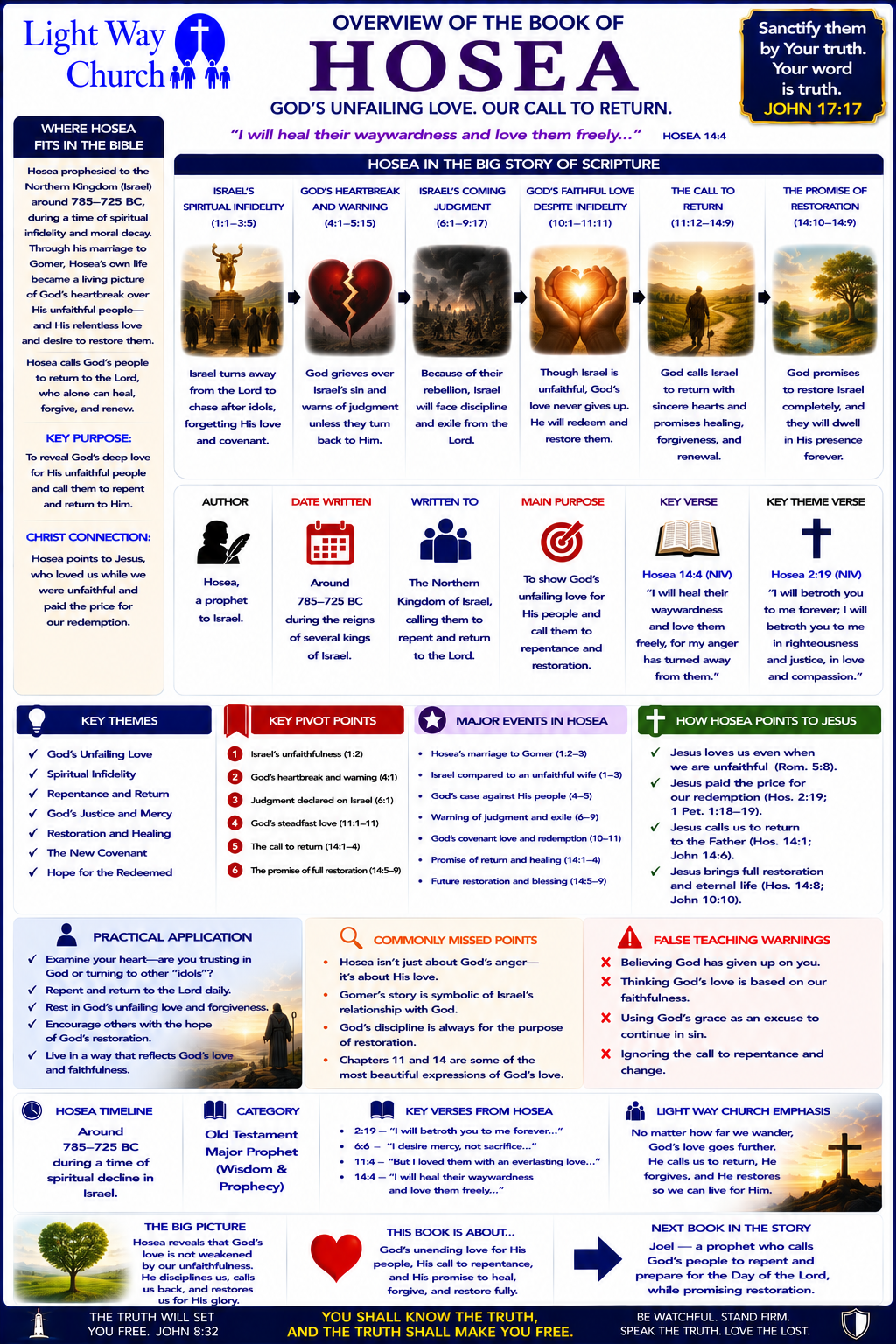
Hosea uses the prophet's family life and direct prophetic preaching to portray Israel's unfaithfulness and God's covenant love. Judgment is real, but the final movement is a call to return and a promise of healing and restoration.
Author and Setting
Author: Hosea son of Beeri, a prophet primarily to the northern kingdom of Israel.
Setting: Hosea ministered during the eighth century BC, during the reigns of Uzziah, Jotham, Ahaz, and Hezekiah in Judah and Jeroboam II in Israel. Israel experienced prosperity but deep covenant unfaithfulness before the Assyrian conquest.
Purpose
To expose Israel's spiritual adultery and announce judgment while revealing the persistent covenant love of God, who calls His people to return to Him.
Major Themes
- Covenant love
- Spiritual adultery and idolatry
- Judgment
- Repentance and return
- Knowing God rather than empty ritual
- Restoration
Book Structure
- Chs. 1–3 — Hosea's marriage becomes a prophetic picture of Israel's unfaithfulness and God's pursuing love
- Chs. 4–10 — Charges against Israel: lack of knowledge, corrupt worship, leadership failure, and coming judgment
- Chs. 11–14 — God's compassion, Israel's history, call to repentance, and promised restoration
Key Scriptures
· · · ·
Christ in the Book
Matthew applies Hosea 11:1 to Jesus, showing how Christ embodies and fulfills Israel's story. Hosea's picture of faithful divine love toward an unfaithful people also helps illuminate the saving grace ultimately displayed in Christ.
Practical Application
Religious activity cannot substitute for knowing and obeying God. Sin damages covenant relationship, but God's call to repentance is genuine. Believers should respond to God's steadfast love with faithfulness rather than presumption.